


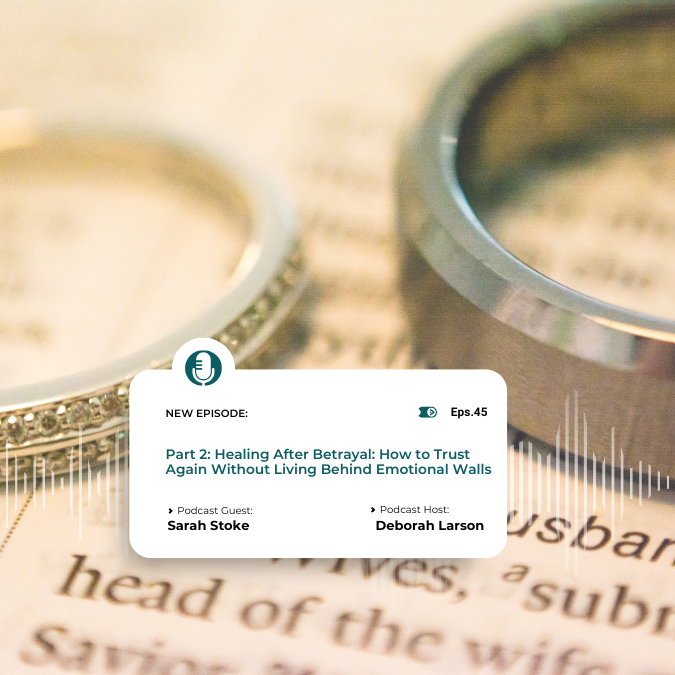
Healing After Betrayal: How to Trust Again Without Living Behind Emotional Walls
Most people think guarding their heart is wisdom.
Sometimes it is.
But it can become survival.
There comes a moment after betrayal, grief, disappointment, or emotional exhaustion when walls start to feel safer than connection. You stop expecting, stop trusting and you stop allowing people close enough to hurt you again.
The problem? The same walls keeping pain out may also be keeping healing out.
In this episode of Redeeming Her, Deborah Larson sits down again with Sarah Stoke to continue an honest conversation about marriage, betrayal, separation, grief, faith, identity, and rebuilding trust after everything feels broken.
Why Healing After Betrayal Often Looks Like Protection Instead of Healing
Betrayal rarely announces itself.
Sometimes it arrives through broken expectations, through grief or role changes.
It can show up through years of carrying wounds you thought were already healed.
Sarah described reaching a place where independence became safety.
She had built a successful career, financial stability, and confidence in her ability to stand alone.
When life became painful again, the response felt immediate: I will never do this again.
That response didn’t feel emotional. It felt logical.
That is what makes emotional walls so difficult to recognize.
Pain often disguises itself as clarity.
Ask yourself:
- Am I protecting my peace—or avoiding vulnerability?
- Have I confused independence with healing?
- Am I reacting to this moment—or reliving another one?
These questions matter because unresolved hurt rarely stays in one season of life.
Rebuilding Trust After Betrayal Requires More Than Forgiveness
One of the strongest themes in this conversation was accountability.
Not blame. Not scorekeeping. Accountability.
Sarah explained that rebuilding trust was not one dramatic moment—it became hundreds of small conversations.
Conversations that sounded like:
- This hurt me.
- Help me understand.
- What did you mean?
- What do we need now?
Trust did not return overnight. It was rebuilt through consistency.
Forgiveness opened the door. Trust walked through it slowly.
That distinction matters because many people expect forgiveness to immediately create safety again.
It doesn’t.
Trust requires repeated evidence.
Healing requires repeated vulnerability.
And vulnerability is difficult when your heart still remembers what happened.
Faith, Grief, and the Questions We Ask When Life Doesn’t Make Sense
One of the most powerful parts of this conversation was the honesty around difficult conversations with God.
Not walking away.
Not pretending.
But bringing disappointment directly into relationship.
Questions like:
- Why did this happen?
- Why again?
- Did I misunderstand?
- What am I supposed to learn?
That process became less about receiving immediate answers and more about becoming grounded again.
Because healing wasn’t found through avoiding hard questions.
It was found through staying present long enough to hear something different.
Healing often starts when we stop asking:
“How do I escape this?”
…and begin asking:
“Who am I becoming through this?”
How to Stop Living Behind Emotional Walls
If you’re carrying grief, betrayal, disappointment, loss, or fear:
You do not need to demolish every wall overnight. But you may need to open a gate.
Start here:
✓ Name what hurts
✓ Have the uncomfortable conversation
✓ Ask for understanding before assumptions
✓ Accept that trust rebuilds slowly
✓ Stay curious instead of defensive
✓ Allow healing to happen in layers
You are not required to have every answer before taking one healthy step forward.
Healing is rarely dramatic.
More often—it looks like choosing connection one conversation at a time.
Final Reflection
Trust is not weakness.
Vulnerability is not failure.
And healing after betrayal does not mean pretending pain never happened.
It means refusing to let fear become your permanent address.
If this conversation stirred something in you, sit with it.
Write down what surfaced.
Then ask yourself:
Where have I built a wall that was meant to become a doorway?



Comments